
When being understood is not enough
This is one of those films that, when it ends, leaves you staring at the screen. It has happened to me a few times, and one of the most recent was with All of Us Strangers. When it happens, I remember it, precisely because it’s rare, and precisely because it means that something worked. But what works, exactly?
What works is that you find yourself in silence not because of immediate emotion, but because of that kind of slow resonance that arrives afterward, when the film has already stopped speaking and yet continues to work inside you (does this sound familiar?). It’s a film that doesn’t ask to be understood quickly: it asks to be held.
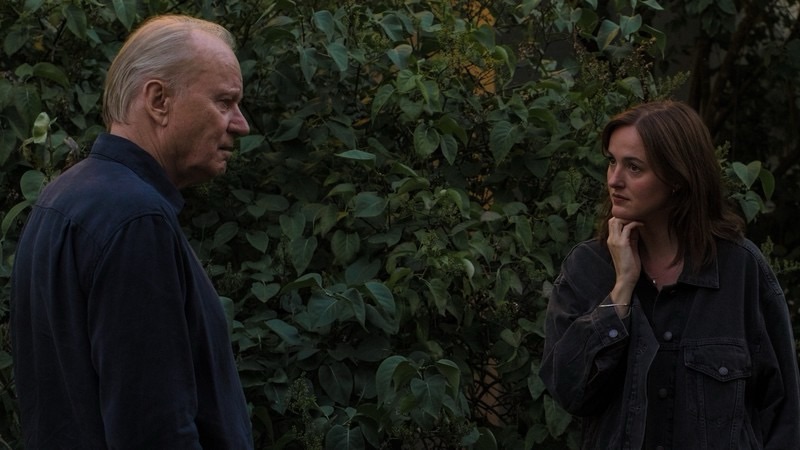
Director Joachim Trier returns to the territory he knows best, relationships, memory, intimate fractures, but does so from a more mature perspective, less ironic, almost stripped bare. He brings with him the same lead actress from The Worst Person in the World, who once again holds the screen beautifully, as – dare I say – only she knows how to do.
Despite the title, Sentimental Value is not a film about affection in the romantic sense. It is a film about what happens when emotional value is not recognized, named, or returned at the right time.
In this film, no one is openly cruel. No one explicitly spells everything out. No one clearly says what is happening. And if someone tries, they are immediately silenced. And that is precisely what hurts.
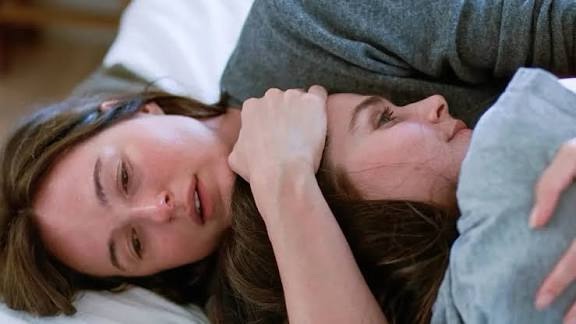
There are two sisters, there is a father, there is no mother. But there is, nonetheless, a family. The father is a man who loves, in his own way. But his love never translates into attunement. He is present without being available, involved without being responsive. He tries, in his own way, resorting to irony when what is needed is listening. There is no violence, no overt abandonment. There is something more subtle and clinically devastating: an emotionally opaque presence.
From a psychological point of view, we are faced with a form of self-centered parenting. The father feels, remembers, reworks – and he does this very well. He can do it in moments of solitude, he uses writing and his work, but he always does so starting from himself. He remains egocentric, self-focused, perhaps excessively so. The other, in this case the older daughter, remains a passive recipient, never truly an interlocutor. Here the film sharpens a knot we know very well in clinical work.
It is not absence that traumatizes, but non-attuned presence.
When a child, and later an adult, is not seen in their internal states, they quickly learn that intimacy is an uncertain place. Not dangerous, but unreliable. Trust begins to waver, and recovering it becomes almost a mission impossible once one becomes “grown-up.” It can be done, yes, it’s not impossible. But it requires a great deal of work, commitment, and effort.
Here, however, we are in a film, and the father’s artistic gesture arrives, even if late. It is an attempt to say what was never said, to recognize what was never recognized. But the film is very clear about one uncomfortable point: not everything that is authentic is also reparative.
Art, here, is not care, it is exposure. I use it to expose myself, to tell you who I am, to make you understand that I have always seen you, in some way, in the only way I was capable of, even if, for you, that way was not enough.
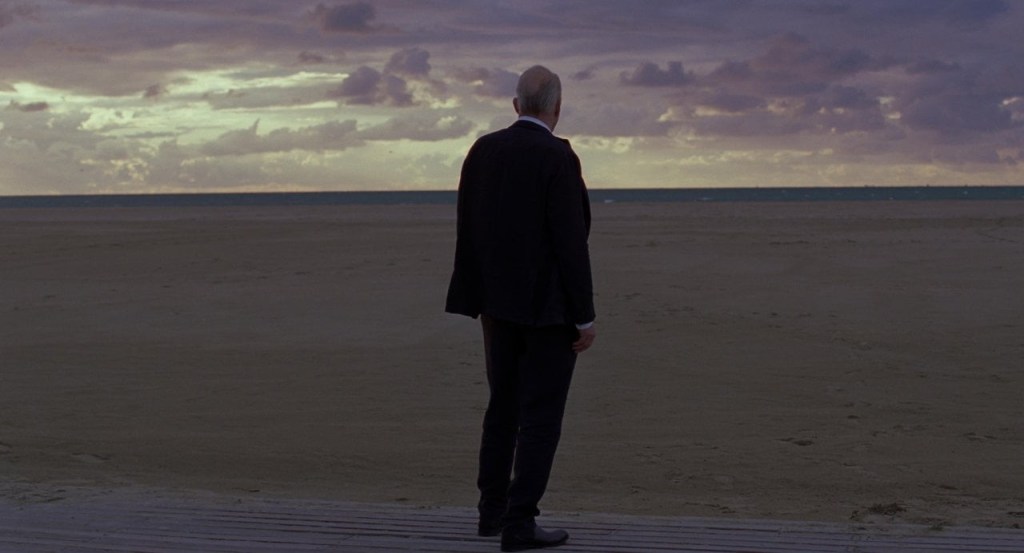
There is a powerful and widespread fantasy according to which retroactive understanding equals repair. Sentimental Value gently dismantles it. Belated recognition can be experienced as intrusive, even violent, because it arrives when the bond has already organized itself around absence.
From a clinical point of view, this touches a fundamental boundary: the difference between personal elaboration and restitution to the other. Understanding does not automatically mean having the right to involve someone who has already paid the price of being misunderstood.
So, what is a daughter supposed to do?
Obviously, there is no answer. The two daughters in the film are not “stuck.” They function. They create. They live. Because, in some way, one must learn to build an identity, grow up, move forward. And this is precisely what makes their pain less visible and more profound.
There is no overt symptomatology, no explicit request for help. There is a personality organization built on hyper-autonomy, early competence, and the idea that feeling too much is a risk.
In clinical practice, we see this often: maturity is not always a sign of health. Sometimes it is a survival strategy.
The film shows with great precision the mourning for the parent who was never truly there. A complex mourning, because it does not concern a concrete loss, but a possibility that was never realized. And unsymbolized losses keep returning, in the form of distance, rigidity, silences.
For all these reasons, and certainly for many others I am leaving aside here, Sentimental Value also speaks about therapy, without ever naming it. It speaks of the time required for an experience to become thinkable, but it also suggests something more uncomfortable: that not everything can be reworked together.
As a clinician, I know how delicate it is to work on these wounds, not because they are dramatic, but because they have been normalized for years. As a viewer, this film reminded me how important it is not to force closure, neither in narrative nor in psychic life. In therapy, we often work on the reconstruction of meaning, but this film reminds us that meaning, when it arrives late, may not coincide with the other’s relational need. And that accepting this limit is part of an adult position.
Not everything closes. Not everything recomposes itself.
Some bonds are not repaired, they are redefined. Sentimental Value does not console. It offers no easy reconciliations. It does something more honest: it restores dignity to the pain that comes from having been loved too little and badly (because yes, it happens). When I said it needs to be held, it’s because it stays there, and in some way “heals” the viewer who is only asked to recognize what, perhaps, was not seen enough, in time.
And sometimes, that is already a lot.



 Flavia Capoano
Leave a comment