
It’s Pride Month, and I think it is very important to educate everyone, from adults to kids, regarding very important topics that, unfortunately, are still a bit confused today.
Sex and gender have historically been used interchangeably,
When a person is born, they are given a sex based on their external genitalia. People with penises are assigned male at birth, while people with vaginas are assigned female. Some also refer to chromosomes as markers of sex. Typically (but not always), people are born with either XX or XY chromosomes which determine their physical anatomy, and are assigned a sex based on these characteristics.
Something very important to remember is that assigned sex doesn’t always accurately determine gender identity.
First, it is important to understand the difference between sexual orientation, gender identity, and gender expression:
- Sexual Orientation: This defines who you are romantically, emotionally, and sexually attracted to. This includes being lesbian, gay, bisexual, heterosexual, asexual and pansexual.
- Gender identity: This defines how each individual perceives themselves regarding their gender (man, woman, both or neither).
- Gender Expression: This defines how each individual expresses their gender through behavior, clothing, or appearance.
There are three basic concepts within LGBT that also must be defined:
- Biological sex: Based on genes, hormones, and body parts (such as genitals). People are born as male, female, or intersex.
- Sexuality: Sexual behaviors, relationships and intimacy.
- Gender: Set of ideas, beliefs and social attributions, which are built in each culture and historical moment. There is the masculine and feminine gender.
So, what does it mean gender dysphoria?
Some people grow up feeling a disconnect between their assigned sex and their true gender. This is called gender dysphoria, and it is what is experienced by transgender people including non-binary people, whose innate gender is different to the sex they were assigned at birth. People whose assigned sex matches their true gender are called cisgender.
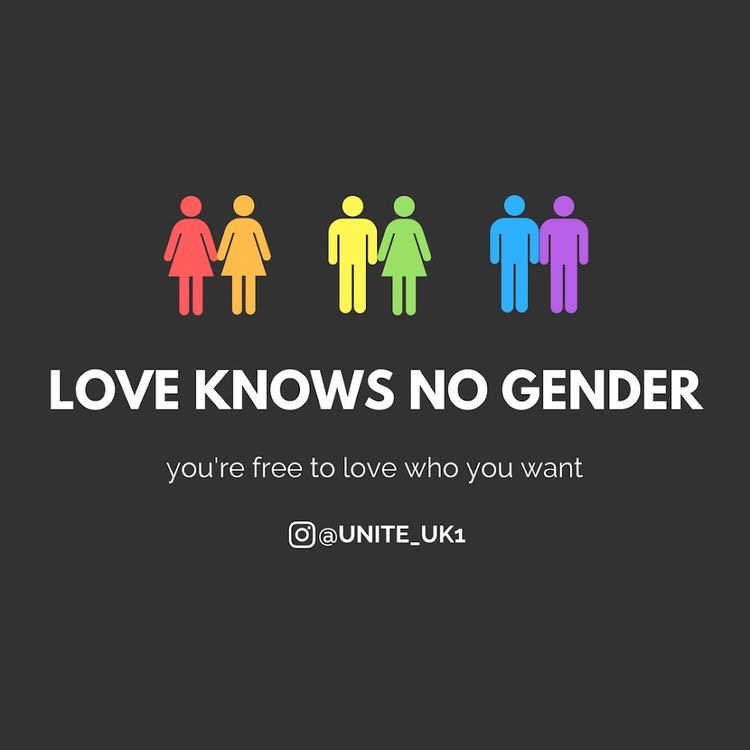
What does the acronym LGBTTT+ stand for?
- Lesbian: Women who are emotionally and sexually attracted to another woman.
- Gay: Men who are emotionally and sexually attracted to another man.
- Bisexual: People who are attracted to both women and men.
- Transsexual: People who have transitioned to the opposite sex to the one they were born with through medical intervention.
- Transgender: People who do not identify with the sex they were born with.
- Transvestite: People who dress and act like the opposite gender.
Outside of LGBTT, there is also the “+”, which includes:
- Intersex: Those who are born with a reproductive or sexual anatomy that does not conform to either the masculine or the feminine or have a mixture of both.
- Queer: This is a term taken from English that is defined as “unusual” and is used by people who do not feel included in the traditional way in which sexual or gender identity is defined.
- Asexual: Those who have no or minimal sexual attraction.
- Pansexual: Those who are attracted to another person regardless of their gender, orientation, expression, or identity.
- Fluid gender: People who do not have a fixed gender identity.
Understanding the LGBT+ flag
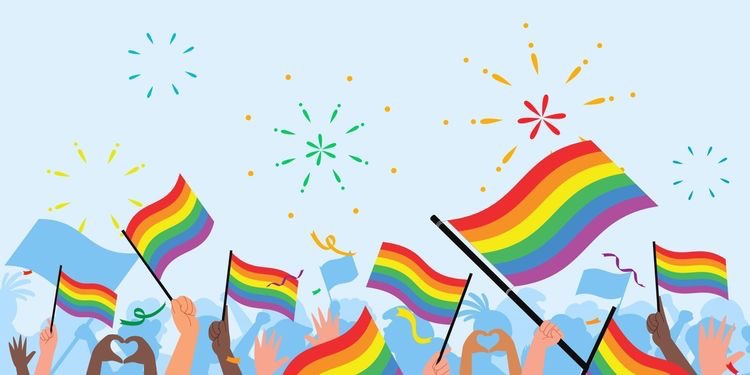
The first rainbow flag was designed by artist Gilbert Baker in 1978, driven by the need to show the world a symbol that represented the entire community. The first time this flag was seen was during that same year in San Francisco.
The rainbow flag was designed with a specific purpose, with each color representing something different:
- Red: sexuality and life
- Orange: health
- Yellow: sunlight
- Green: nature
- Blue: serenity and art
- Purple: the spirit



 Flavia Capoano
Leave a comment