
ADHD Awareness Month — October
“You just need to try harder.”
“Everyone gets distracted sometimes.”
“You’re so disorganised.”
“You can focus when you really want to.”
Many people with ADHD have heard these sentences more times than they can count. Sometimes they come from teachers, parents, partners, colleagues or friends. Sometimes, after years of hearing them, they become the words people use to describe themselves.
They may sound like harmless comments, everyday observations or even attempts to motivate someone. But they can carry a powerful message: your difficulties are your fault.
During ADHD Awareness Month, perhaps one of the most useful things we can do is reconsider the language we use when talking about ADHD. Not because every sentence needs to be perfect, or because we should avoid difficult conversations, but because the words we choose influence how we interpret behaviour, understand difficulties and decide what kind of support might actually help.

What if, instead of asking people with ADHD to try harder, we started asking what makes a task so difficult to begin with?
1. “You just need to try harder.”
Try reframing it as: “I can see you’re struggling. What is making this difficult, and what might help?”
Effort and outcome do not always go hand in hand.
A person with ADHD may spend considerable time, energy and emotional resources trying to complete something that appears relatively straightforward to someone else. Difficulties with task initiation, planning, prioritisation, working memory or sustaining effort can make everyday responsibilities disproportionately demanding.
This does not mean that effort is irrelevant, or that people with ADHD cannot develop effective strategies. It means that telling someone to try harder does not necessarily address the barrier preventing them from moving forward.
Sometimes, the most useful intervention is not more pressure, but a clearer starting point, a smaller task, external structure, a visual reminder or support with planning.
Instead of assuming that someone is not trying, we can become curious about what is getting in the way.
2. “Everyone gets distracted sometimes.”
Try reframing it as: “Distraction happens to everyone, but how often does it happen, and how much does it affect everyday life?”
It is true that everyone loses focus occasionally. Everyone forgets things, procrastinates or struggles to concentrate from time to time.
But recognising that an experience is common is not the same as recognising that its intensity, frequency or impact is the same for everyone.
ADHD is a neurodevelopmental condition. Its symptoms are persistent, begin during development and can affect multiple areas of life. Diagnosis requires a comprehensive assessment rather than the identification of a single behaviour.
The important question is not whether someone has ever been distracted. It is whether a persistent pattern of difficulties affects their ability to function across everyday contexts.
When we use “everyone does that” to dismiss someone’s experience, we risk confusing familiarity with equivalence.
Understanding ADHD means looking beyond whether a behaviour exists and considering how it unfolds in a person’s life.
3. “You can focus when you really want to.”
Try reframing it as: “Your attention seems to work differently depending on the task and the context. Let’s understand what influences it.”
This is one of the most persistent misconceptions about ADHD.
Someone may spend hours immersed in an activity they find interesting, stimulating or rewarding, yet struggle to begin a routine administrative task, revise for an exam or answer an important email.
From the outside, this can look like a choice: they can concentrate when they want to, so why can’t they do the same when something matters?
Attention, however, is not simply a matter of deciding to focus.
Interest, novelty, urgency, reward, emotional state, environmental distractions and task demands can all influence how attention is allocated and sustained. For many people with ADHD, regulating attention consistently across different situations can be particularly difficult.
This is why being able to concentrate intensely on one activity does not rule out ADHD, nor does it mean that difficulties elsewhere are deliberate.
The ability to focus is not the same as the ability to regulate focus consistently.
And that distinction matters.
4. “You’re just lazy.”
Try reframing it as: “I’m noticing that this isn’t getting done. Let’s work out why.”
Laziness is often used as an explanation when we cannot see the effort someone is making.
But a completed task is visible. The mental effort required to start it, organise it, remember each step, tolerate frustration and return to it after an interruption is not.
When someone repeatedly struggles to complete tasks, it is easy to interpret the outcome as a reflection of their character. Yet the same outcome can arise for very different reasons.
Task initiation, executive functioning, emotional regulation, sleep difficulties, anxiety, low mood and environmental demands may all play a role. The explanation will depend on the individual and the situation.
Reframing does not mean assuming that every difficulty is caused by ADHD. It means resisting the temptation to jump straight from a behaviour to a judgement about someone’s character.
Instead of asking whether a person is lazy, we can ask what is happening between their intention to do something and their ability to carry it out.
That is a much more useful place to start.
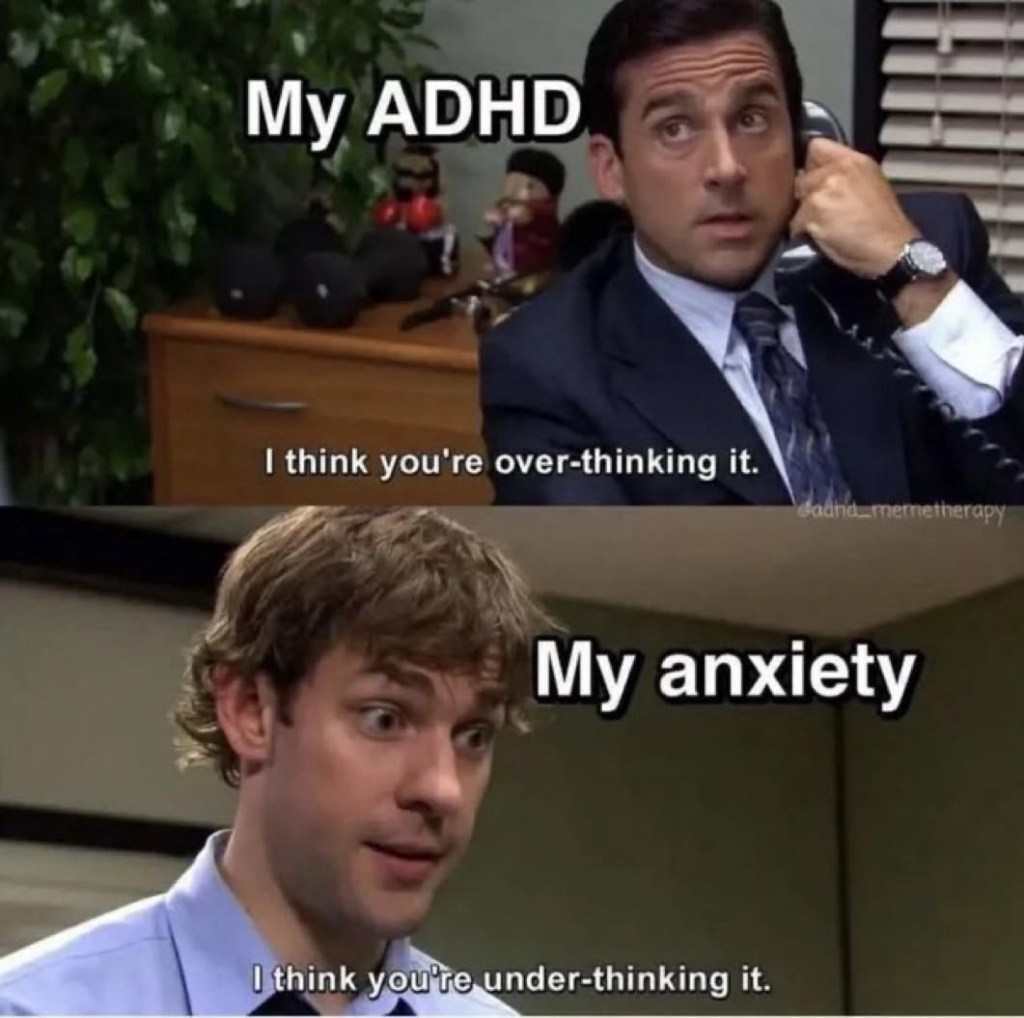
5. “You’re so disorganised. You need to get your life together.”
Try reframing it as: “Which parts of this are hardest to manage, and what kind of structure would make them easier?”
Organisation is often treated as a personal virtue: some people have it, others simply need to work on themselves.
But organisation relies on several interconnected skills, including planning, prioritisation, time management, remembering intentions and keeping track of information.
For someone with ADHD, these demands can become difficult to manage, particularly when several tasks compete for attention or when there is no immediate consequence for forgetting something.
A reminder on a phone, a shared calendar, a visual checklist, a predictable routine or breaking a project into smaller steps may be far more effective than repeatedly insisting that someone become more organised.
These strategies are not signs of failure. They are ways of adapting the environment to support the person.
We do not expect every person to use the same tools to navigate the world. There is no reason to expect that everyone should manage their responsibilities in exactly the same way, either.
The goal is not to make everyone equally organised. It is to help people find systems that work for them.
6. “But you’re so intelligent. How can you struggle with something so simple?”
Try reframing it as: “Being capable in one area doesn’t mean every task will be equally easy.”
This comment can be particularly painful because it turns a person’s strengths into evidence against their difficulties.
Intelligence, knowledge, creativity and professional competence do not automatically translate into consistent performance across every situation.
A person can understand a complex theory and still forget an appointment. They can solve a demanding problem at work and struggle to organise their paperwork. They can know exactly what they need to do and still find it difficult to begin.
These experiences are not necessarily contradictory.
Knowing how to do something and being able to organise, initiate and complete it consistently are different demands.
When we assume that capability should make every task easy, we overlook the complexity of human functioning. We may also increase the shame people feel when their performance does not match their own expectations or the expectations of others.
A more helpful question is not, “How can you be good at this but struggle with that?”
It is, “What makes this particular task difficult, despite everything you are capable of?”
7. “ADHD is your superpower!”
Try reframing it as: “ADHD can come with strengths, challenges and support needs. You don’t have to turn it into a superpower for your experience to matter.”
There is a reason why the language of superpowers has become so popular. It offers an alternative to deficit-based narratives, celebrates difference and reminds people that an ADHD diagnosis does not define their worth. That matters.
Some people with ADHD experience creativity, spontaneity, curiosity, enthusiasm, intense engagement with particular interests or the ability to respond effectively in stimulating situations. These experiences can be meaningful personal strengths.
But they are not universal, and they do not cancel out the difficulties associated with ADHD.
Not everyone experiences their ADHD as a gift. Some people feel exhausted by the effort required to navigate everyday life. Others experience both genuine strengths and substantial difficulties, sometimes within the very same activity.
Telling someone that their ADHD is a superpower can unintentionally create another expectation: that they should be able to turn their struggles into something positive. They do not have to.
ADHD does not need to be romanticised to be understood, and a person does not need to identify strengths in every difficulty to feel valued.
A more balanced approach makes room for the whole experience: what feels meaningful, what feels difficult, what requires support and what the person wants to change.
8. “You just need to be more disciplined.”
Try reframing it as: “Let’s find routines and strategies that you can realistically maintain.”
Discipline is often presented as the universal solution to inconsistency.
But a strategy that relies entirely on remembering, planning ahead, resisting distractions and repeating an action without immediate reward may be particularly difficult to sustain for someone who struggles with executive functioning.
This does not mean that routines are pointless or that people with ADHD cannot develop habits. It means that strategies need to be designed around the person’s actual needs rather than an idealised version of how they should function.
A routine that works on paper but collapses under everyday demands is not necessarily evidence that someone lacks discipline. It may be a sign that the routine needs to change.
Perhaps it needs fewer steps, more visible reminders, a different time of day, greater flexibility or support from another person.
The question is not simply how to become more disciplined.
It is how to build a way of doing things that is sustainable, realistic and responsive to the person’s life.

From judgement to curiosity
Reframing these sentences does not mean removing accountability from relationships, lowering expectations or assuming that every difficulty can be explained by ADHD.
People still have responsibilities. Their actions can affect others, and the impact of those actions matters.
But accountability and understanding are not opposites.
We can acknowledge that something needs to change without labelling someone as lazy. We can discuss the impact of missed deadlines without assuming a lack of care. We can support the development of skills without treating difficulties as moral failures.
The difference lies in what happens next.
A judgement tends to close a conversation: You’re lazy. You’re careless. You don’t try hard enough.
Curiosity opens one: What’s happening? What is making this difficult? What can we change? What support would help?
This shift can be particularly important for people who have spent years receiving negative feedback about behaviours they have struggled to understand themselves. Repeated criticism can contribute to shame, self-doubt and a sense of inadequacy, especially when someone repeatedly tries to meet expectations without understanding why certain demands remain so difficult.
A more compassionate explanation does not erase those experiences, but it can create room for a different relationship with oneself.
And for parents, teachers, partners, colleagues and clinicians, it can change the kind of support we offer.
Awareness means changing more than our vocabulary
During ADHD Awareness Month, it is worth remembering that awareness is not simply knowing what the letters ADHD stand for.
It means recognising the complexity of the condition, understanding that its presentation varies between individuals and questioning the assumptions we make about behaviour.

It also means recognising the limits of language. A more thoughtful sentence will not, by itself, resolve executive functioning difficulties, remove barriers or replace appropriate assessment and support.
But language can influence whether someone feels safe enough to explain what they are experiencing, whether their difficulties are taken seriously and whether we look for practical solutions rather than assigning blame.
Sometimes, the first step towards meaningful change is not asking someone to change themselves.
It is changing the question we are asking them.
Instead of “Why can’t you just do it?”, we might ask, “What would help you do it?”
Instead of “Why don’t you try harder?”, we might ask, “How much effort is this already taking?”
And instead of “What’s wrong with you?”, we might begin with a much more useful question:
“What do you need, and how can we work it out together?”
Because understanding ADHD is not about finding a more polite way to judge people.
It is about moving beyond judgement altogether, towards a more accurate, compassionate and practical understanding of how people function.
And perhaps that is where awareness becomes something more than a month on the calendar.
It becomes a different way of seeing people.
Flavia Capoano, psychologist and Behaviour Analyst working with children, adolescents and adults, with a particular focus on neurodivergence. I offer psychological support and assessment pathways in Italian and English.
If this article resonated with you, share it with someone who wants to understand ADHD beyond the clichés.





Leave a Reply