
There is something about cats that feels… neurologically honest.
Not comforting in the conventional sense. Not predictable. Not even particularly “easy” to love. And yet, for many neurodivergent minds, especially ADHD brains, the connection can feel immediate, almost instinctive.
I have often wondered why.
And the answer, I think, sits somewhere between psychology and something more embodied, something we feel before we fully understand.
Attention is not the problem
ADHD is still, too often, described as a deficit of attention.
But clinically, we know it is closer to a difference in attention regulation (Russell Barkley, 2015). Attention is not lacking, it is interest-based, emotionally driven, and context-dependent.
This is why an ADHD brain can feel both scattered and intensely focused, sometimes within the same hour.
Cats, in their own way, operate similarly.
They do not engage out of obligation.
They orient towards what feels relevant, safe, or interesting, and disengage just as freely.
There is no demand for sustained, performative attention. And that, for many, feels like exhaling.
The absence of social performance
Many neurodivergent individuals grow up learning how to simulate social ease.
Eye contact that feels too long or too brief.
Timing that must be calculated.
Energy that needs constant modulation.
This is what we often refer to as masking (Laura Hull et al., 2017), the effortful adaptation to neurotypical social expectations.
Cats do not require any of this.
They do not read your silence as failure. They do not expect reciprocity in conventional forms. They do not ask you to be socially fluent. They allow for a kind of presence that is not mediated by performance.
From a psychological perspective, this is not a small thing. It is regulating.
Co-regulation, but at the right distance
Co-regulation is central to how nervous systems stabilise (Stephen Porges, 2011).
But not all co-regulation is experienced as safe. For ADHD and many neurodivergent profiles, excessive stimulation, even relational, can become dysregulating.
Too much proximity, too much emotional demand, too much unpredictability.
Cats seem to intuitively respect a different threshold.
They offer:
- proximity without insistence
- contact without overwhelm
- presence without intrusion
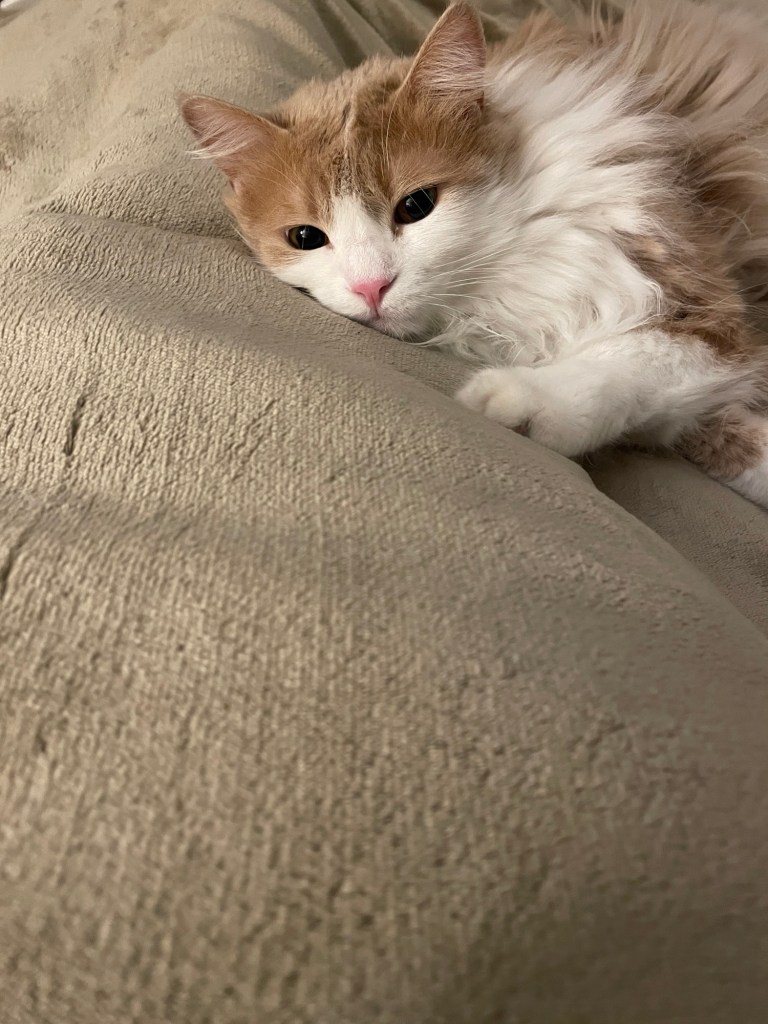
A cat sitting nearby, not requiring interaction, but allowing it, creates a form of regulation that is opt-in.
And that makes all the difference.
Predictability without rigidity
ADHD brains often struggle with rigid consistency, yet thrive on manageable novelty.
Too much sameness leads to disengagement. Too much unpredictability leads to overwhelm.
Cats exist in that in-between space.
They are rhythmic, but not repetitive.
Familiar, but never entirely predictable.
Small variations, where they sit, how they approach, when they seek contact, create a low-intensity novelty that keeps the nervous system gently engaged.
It is stimulation, but it does not flood.
Attachment, really?
Cats are often described as independent, almost dismissive, but what they offer is closer to a form of non-intrusive attachment.
Attachment theory has long emphasised the importance of proximity and responsiveness (John Bowlby, 1969).
But for many neurodivergent individuals, constant proximity can feel overwhelming rather than reassuring.
Cats come close, and then they move away.
They connect, and then they regulate themselves.
This creates space within the relationship.
And space, in this context, is not absence, it is what makes connection sustainable.
My personal note
There are days when my mind feels too fast, too fragmented, too full of unfinished threads.
Days when even the idea of focusing feels like trying to hold water in my hands.
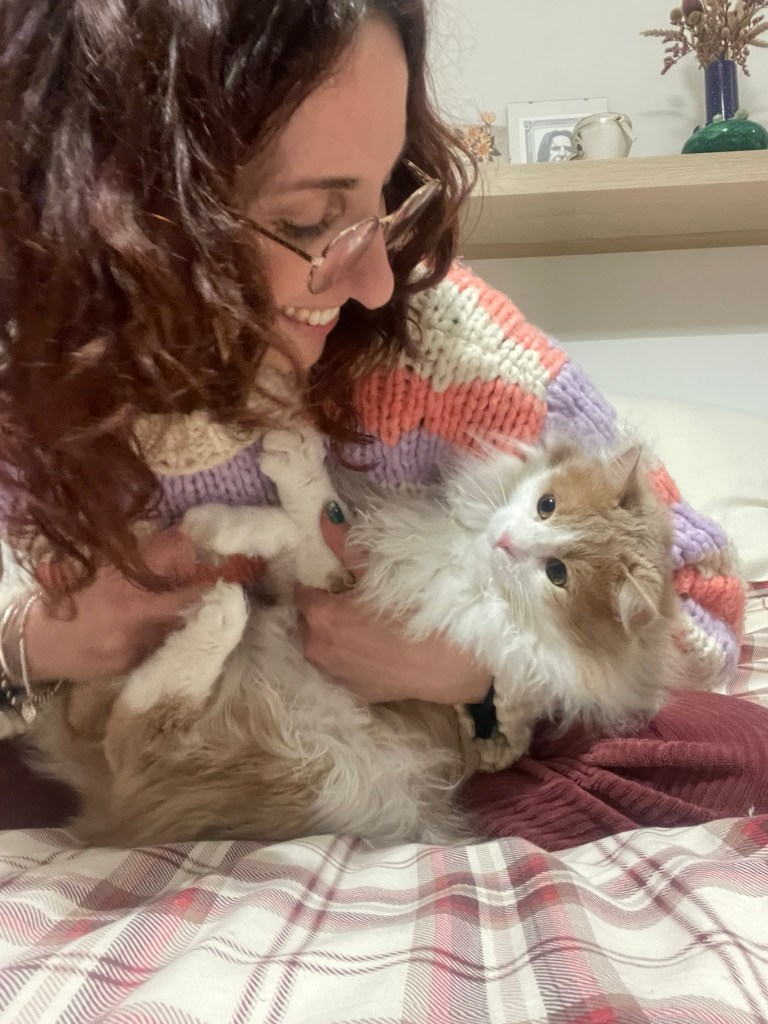
And then there is a cat, sitting quietly in the same room.
Not asking me to organise my thoughts.
Not asking me to slow down.
Not asking me to explain.
Just there.
In clinical language, I could call this co-regulation, sensory grounding, or attentional anchoring. But lived experience has a simpler vocabulary.
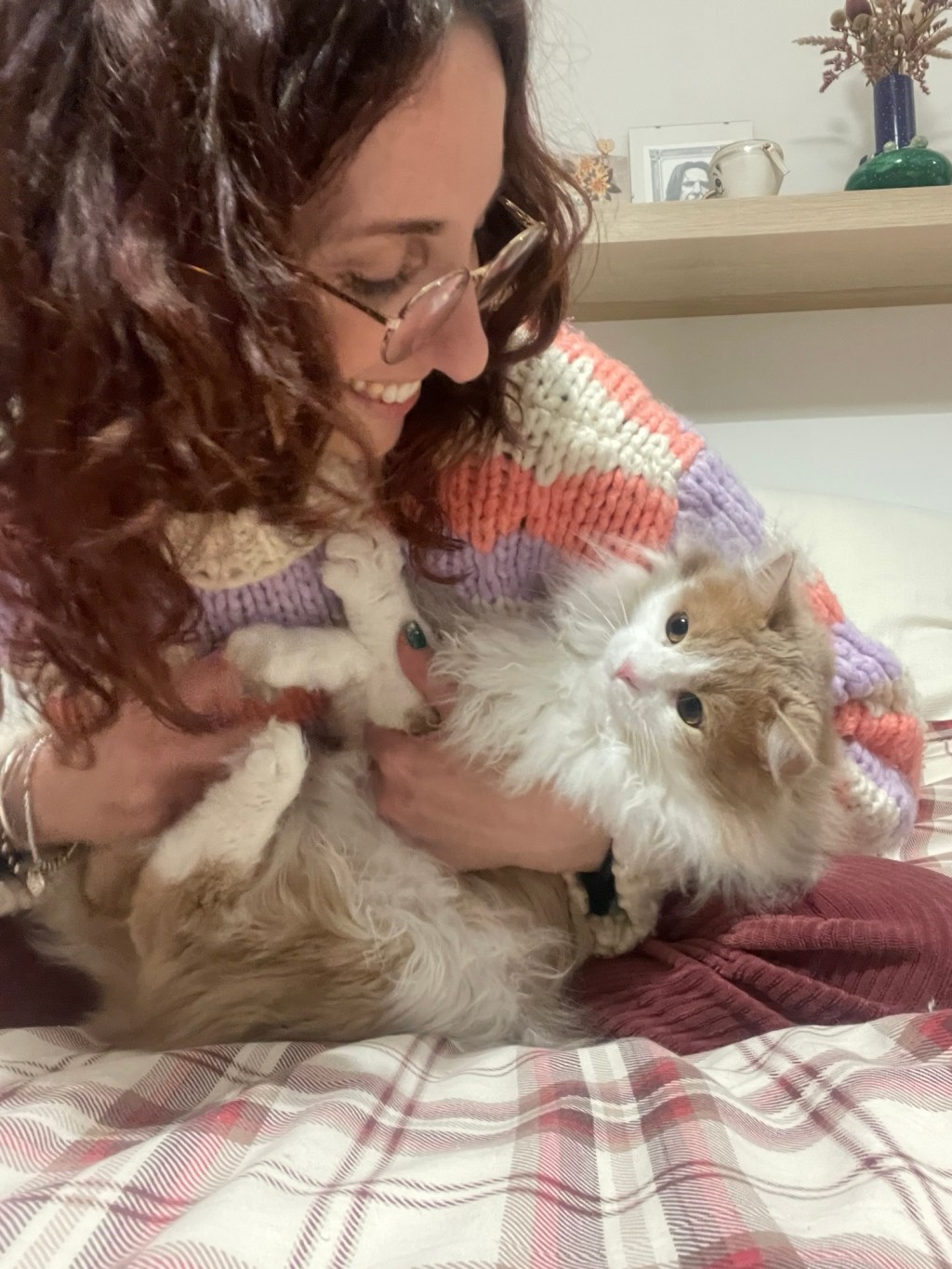
It feels like being allowed to exist, without adjustment.
What does it mean, psychologically, to experience a relationship where regulation does not require self-modification?
And what would change if more of our environments, not just our pets, worked in the same way?



Leave a comment