
What Seven Years in London Taught Me About a Simple Question
It feels slightly ironic to begin with this question, but it’s been a while since I last sat down to write.
Not because I didn’t have ideas. They were there, floating somewhere between I’ll do it later and I still haven’t found the right words. Then, as often happens, someone sparked something.
An ordinary conversation with a friend, one of those conversations that starts casually and somehow ends up opening entire worlds, brought me back here.
So, before anything else, thank you to him. (Happy now?)
We were talking about small talk. More specifically, about that simple question we ask and answer dozens of times a day without thinking much about it:
“How are you?”
The more I thought about it, the more I realised there was far more hidden inside those three words than first appears.
For those who don’t know me, I spent seven years living in London before moving back to Italy four years ago. Part of my heart is still there, and I suspect it always will be. Why mention it?
Because somewhere between London and Rome, I discovered that even something as ordinary as a greeting can reveal surprisingly different ways of understanding relationships.

There are many things nobody teaches you when you move abroad. And there are just as many things nobody teaches you about coming back home.
Social rituals belong firmly in that category.
Seven years in London trained me in a form of politeness that felt almost ritualistic. A carefully choreographed social dance made of gentle smiles, respected boundaries, and questions that aren’t really questions.
“Hey, how are you?”
“You alright?”
These aren’t necessarily invitations into someone’s inner world. They’re social codes. Tiny bridges that allow people to acknowledge one another, establish goodwill, and move on.
And honestly? It works remarkably well.
I’ll never forget one particular morning during my internship. Like every other day, someone asked me how I was doing. The problem was that I had just come off an absolutely awful weekend. I had spent most of it crying over a long-distance relationship that wasn’t working out, and I wasn’t exactly feeling my best.
So I looked up from my coffee mug and answered honestly:
“Actually, I feel like shit.”
The look on my colleague’s face was priceless. Pure panic. The kind of panic that comes from suddenly finding yourself in a conversation you didn’t realise you were having. She stared at me for a second, visibly unsure what to do next. Then she walked away. Without saying a word. After spending two days crying, I laughed so hard I nearly spilled my coffee. To this day, I still wonder what she thought had just happened.
But the truth is that nothing unusual had happened at all.
I had simply broken an unspoken social contract.
Because in that context, relationships are not built around emotional immediacy. They’re built around a delicate balance of respect, predictability, and personal space.
Nobody overwhelms you. Nobody demands emotional disclosure. And almost nobody puts you in the position of having to answer honestly when you don’t want to.
British politeness can sometimes seem distant, even slightly artificial. But it serves a very clear purpose: it protects people’s boundaries.
It allows individuals to coexist comfortably without requiring emotional access to one another.
Then I moved back to Rome.
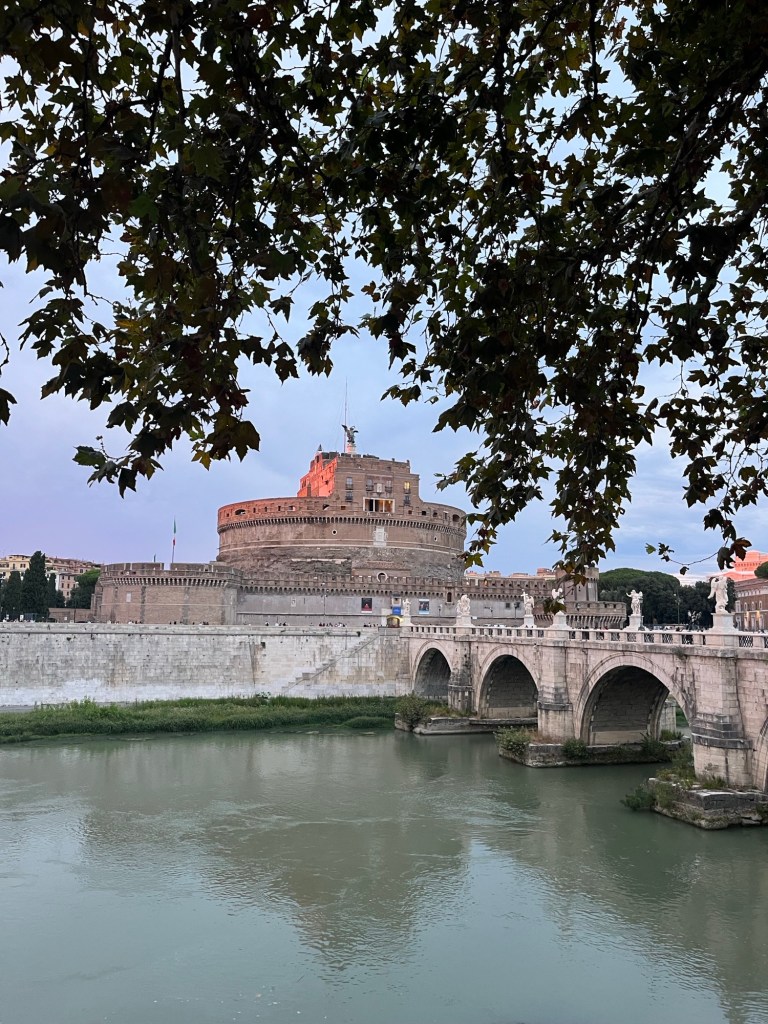
And suddenly, “How are you?” stopped being a formality.
Because here, if you ask the question, there’s a reasonable chance you’re about to get a real answer. A detailed one. Possibly a dramatic one. Maybe an ironic one.
Sometimes an answer that includes family history, unsolicited details, several side stories, and a full emotional update before you’ve even had your first sip of coffee.
The first months felt like reverse culture shock. And I’m only half joking.
I found myself automatically replying, “Fine, thanks. And you?” even when it wasn’t true.
At the same time, saying how I actually felt seemed strangely inappropriate, as though I were still following rules that no longer applied.
And this is where things become particularly interesting from a psychological perspective. These seemingly insignificant social rituals are not insignificant at all. They are forms of regulation. They help us manage closeness and distance. They communicate our boundaries. They tell others how available, or unavailable, we are for connection.
In many British contexts, politeness functions as a protective layer. Interactions remain smooth, predictable, and relatively low-risk. Respect is expressed through non-intrusion.
In Italy, and especially in Rome, relationships often move much more quickly towards emotional openness. There tends to be less filtering, less distance, and a greater expectation of personal engagement.
There is warmth in that. But there is also exposure.
And neither approach is inherently better.
What differs is the level of tolerance for emotional proximity. For some people, the British version of “How are you?” feels reassuring. It doesn’t demand anything. It allows privacy. It leaves room for choice. For others, it can feel hollow, a script that carefully avoids genuine contact.
Likewise, Roman directness can feel wonderfully validating. Finally, someone who genuinely wants to know.
Or it can feel overwhelming, especially when you don’t have the emotional resources for that degree of closeness.
What I’ve learned since returning isn’t that one culture gets it right and the other gets it wrong. It’s that the real difference isn’t in the question itself.
It’s in the space we create around the answer. Perhaps relational competence isn’t about choosing between politeness and authenticity. Perhaps it’s about learning to recognise what a particular moment requires.
Knowing when “Fine, thanks” is enough.
Knowing when there is room for something more honest.
Knowing when someone needs protection.
And knowing when someone needs connection.
Maybe we could all become a little more relationally bilingual. Able to speak the language of politeness when boundaries need protecting, when either we or the person in front of us aren’t in a place where being fully seen feels safe. But also able to recognise those moments when it’s possible to lower the drawbridge and allow a little more truth to emerge.
Because yes, British politeness can sometimes feel slightly artificial. But it protects. And yes, Roman honesty can sometimes feel excessive. But it connects.
Most of us spend our lives somewhere in between, trying to find a way of relating to one another that is both authentic enough and safe enough.
So, if you’ve made it all the way to the end, I have a question for you.
How are you?
But really?





Leave a Reply